How to Boost Your Surron’s Power?
Increase Surron performance with a matched battery, controller and motor. Compare current limits, model compatibility and the parts needed for your setup.
Increase Surron performance with a matched battery, controller and motor. Compare current limits, model compatibility and the parts needed for your setup.

23 March 2025

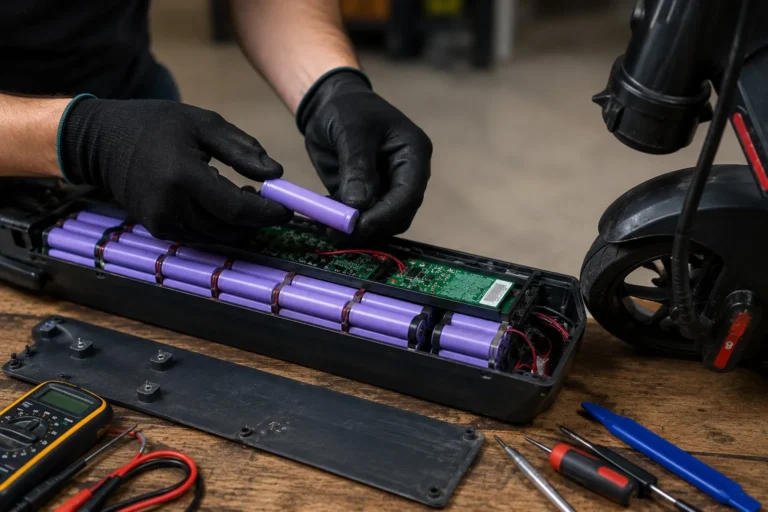
To increase a Surron’s power, match the battery, controller and motor as one system. Start with what you want to improve: acceleration, climbing or sustained performance. A larger battery can give you more energy for the ride, while a suitable discharge capability can support higher controller settings. Neither capacity in Ah nor a kW figure in a battery name tells you the motorcycle’s measured output.
Identify the bike before choosing an upgrade
Light Bee and Ultra Bee need different components and mounting arrangements. Record the exact model, year, motor and controller version. A conversion of an existing 60 V Light Bee is a different project from upgrading a factory 72 V bike. The MY26 Light Bee X, for example, already has a 72 V system.
Choose a controller kit for that exact platform and wiring. Do not assume a kit intended for earlier 60 V Light Bee models fits the factory 72 V generation. This check lets you build a compatible shopping list before ordering.
Read battery and controller limits correctly
Compare continuous discharge current with continuous demand, and peak current with its permitted duration. Check the limits of the cells, BMS, connectors and wiring. The controller’s battery-current setting must work within those limits; its motor phase-current figure is a different measurement.
As an arithmetic example, 72 V multiplied by 100 A is 7200 W of electrical input. Actual battery voltage changes under load, and electrical input is not the same as output at the motor or wheel. This calculation does not predict a top speed or a dyno result.
What each part contributes
A useful upgrade removes the actual constraint in the existing setup. Buying a higher-rated battery alone will not make a controller request more power. Equally, increasing a controller setting cannot make a battery, connector or motor tolerate a load beyond its specification.
| Part | Checks and purpose |
|---|---|
| Battery and BMS | Voltage, discharge limits, usable fit A pack suited to the required load |
| Controller | Version, harness, battery and phase-current limits Compatible control and settings |
| Motor | Supported configuration and temperature limits Performance the motor can sustain |
| Charger | Final voltage, current, connector and polarity Charging suited to the selected pack |
This is a selection checklist, not a table of guaranteed power gains.
Configure the complete drive system
Check the controller’s supported battery voltage, including the fully charged voltage, together with its motor, sensor and harness compatibility. Then configure the battery type, current limits and temperature limits for the installed components. Keep the BMS, circuit protection and thermal protection working.
The same controller name can cover different generations and bike-specific kits. For a TORP TC1000, identify the exact version rather than transferring a maximum rating from another build. A properly matched setup gives you useful control over throttle response and power delivery.
Separate power from gearing and maintenance
Gearing changes the relationship between wheel torque and speed; it does not add electrical power or battery energy. A change that improves low-speed pull may trade away speed at the same motor RPM. Choose it for your terrain and riding priorities.
Check tyre pressure, chain condition, brake drag and the condition of the existing electrical connections before planning a larger upgrade. If performance falls as the bike heats up, diagnose the temperature limitation instead of simply increasing current settings.
Build a shopping list around your riding
For longer rides, compare nominal energy in Wh and the physical fit of the pack. For stronger performance under load, compare the whole system’s continuous and peak limits. These are related buying decisions, but they are not interchangeable.
Send City Lion your model and year, photographs of the battery and controller labels, connector details and your riding priorities. We can use that information to help select a battery and the appropriate configuration. The current category shows the available offers and their individual specifications.
Common questions about Surron power upgrades
Does a higher Ah rating increase motor power?
Ah describes charge capacity. Use V × Ah to compare nominal energy in Wh, then check the discharge capability and the controller settings separately.
Does a battery labelled 30 kW make the bike produce 30 kW?
A pack rating describes its specified capability. The result at the motorcycle depends on the complete drive system, its settings and operating conditions.
Should I choose a battery or a controller first?
Specify the whole setup first. You can then decide which part needs changing and which existing parts can be retained.
Choose a compatible Surron setup
Browse City Lion’s current Surron batteries and accessories, then compare the specifications for your model. Read the battery guide for capacity and charging, or the 72 V guide when planning a voltage conversion.
I have been co-creating City Lion since December 2019 and have been involved with electric vehicles since 2013. My mission is to support the development of electromobility, which will help free the world from emissions, pollution, and noise. Feel free to contact me via LinkedIn.