Upgrading the Surron Battery to 72V: Is It Worth It?
Is a Surron 72 V upgrade worthwhile? Compare model-year compatibility, battery energy, controller, charging and the full cost before choosing a pack.
Is a Surron 72 V upgrade worthwhile? Compare model-year compatibility, battery energy, controller, charging and the full cost before choosing a pack.

23 March 2025

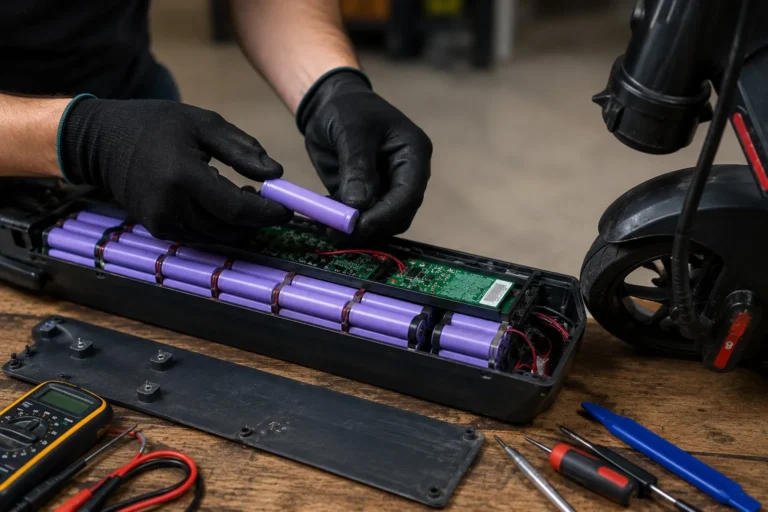
A 72 V Surron battery can be part of a useful drive-system upgrade, but the right choice starts with your existing bike and your goal. Converting a 60 V Light Bee, replacing a battery in a factory 72 V Light Bee and choosing an Ultra Bee pack are different purchases. Compare compatibility, energy and the complete installation cost before choosing a capacity.
First check whether you need a voltage conversion
Read the labels on the installed battery and controller and identify the exact model year. The MY26 Light Bee X is already a factory 72 V model. Advice written for an earlier 60 V Light Bee should not be treated as an installation guide for that bike.
If your main goal is longer riding time, a larger compatible battery at the existing voltage may meet your needs. If you want to change the drive system’s voltage and performance envelope, plan the battery, controller, motor compatibility and charging together.
Compare energy in Wh, not voltage alone
Nominal energy is calculated as voltage multiplied by capacity: Wh = V × Ah. A higher voltage does not automatically mean more stored energy. A 60 V 60 Ah pack and a 72 V 50 Ah pack both represent 3600 Wh of nominal energy, although they require different compatible systems.
Usable energy and energy consumption during riding determine the distance you can cover. Terrain, speed, temperature, rider mass and setup all matter. Compare packs in Wh and use consumption measured on your own routes instead of treating a battery capacity as a fixed kilometre figure.
| Arithmetic example | Nominal energy |
|---|---|
| 60 V × 40 Ah A reference for energy comparison | 2400 Wh |
| 60 V × 60 Ah More energy at the same nominal voltage | 3600 Wh |
| 72 V × 50 Ah The same nominal energy at a different voltage | 3600 Wh |
| 72 V × 60 Ah Compare capacity and voltage together | 4320 Wh |
These are calculation examples, not interchangeable battery recommendations or range-test results.
Check the full electrical and mechanical fit
For a voltage conversion, confirm the controller’s permitted voltage range, the pack’s fully charged voltage, motor compatibility, sensor connections and the exact wiring kit. A controller kit for an earlier Light Bee is not automatically suitable for the factory 72 V generation.
Compare case dimensions, mounting points, lock, lid clearance and cable routing with the actual motorcycle. Check the selected offer’s list of included mounting parts. Neither a shared model name nor a similar-looking connector establishes that two packs are interchangeable.
Budget for the complete setup
Compare the price of the battery with the controller or harness changes that your configuration needs, a suitable charger, mounting parts and installation or configuration work. Keep parts that are confirmed compatible; do not replace them solely because a generic upgrade list says to do so.
Check both continuous and peak current limits and distinguish battery current from motor phase current. More stored energy is useful for longer rides, while current capability supports the required load. A high kW figure in a pack name is not a measurement of your motorcycle’s output.
Choose charging for the selected battery
Match the charger’s final voltage, permitted charging current, connector and polarity to the battery specification. The label 72 V alone is not enough to confirm a match. For a voltage conversion, include the appropriate charger in your plan; for a capacity-only change, check whether your existing charger is approved for the new pack.
Use the installation and setup instructions for the exact components. Retain the battery management and circuit protection, and have the completed configuration checked before normal riding. An installation plan is more useful than an assumed universal list of screws, adapters or settings.
When is moving to 72 V worthwhile?
It makes sense when a compatible complete configuration addresses a specific limitation you experience and the overall cost suits your riding. If a healthy 60 V system already gives you the response you want, compare a higher-energy compatible pack before committing to a voltage conversion.
For an existing 72 V bike, focus on the correct platform, energy, discharge limits, fit and charging. It is a replacement or capacity upgrade, not a conversion merely because the new battery also says 72 V. Choose from current model-specific offers rather than an old ranking based on capacity alone.
Questions before buying a Surron 72 V battery
Will 72 V automatically give me more range?
Compare Wh first. More voltage without more stored energy does not establish a range increase; consumption during the ride also changes the result.
Does every Light Bee need a new controller for a 72 V battery?
Identify the original system and exact controller version. An earlier 60 V conversion and a factory 72 V model need different compatibility checks.
What should I send to get help choosing?
Send your model and year, battery and controller labels, connector photographs, compartment dimensions and the riding result you want to improve.
Compare the right batteries for your Surron
Browse the current City Lion Surron category and compare each offer’s fit, energy and charging requirements. Use the battery guide for the basic checks and the power guide to plan controller and motor limits.
I have been co-creating City Lion since December 2019 and have been involved with electric vehicles since 2013. My mission is to support the development of electromobility, which will help free the world from emissions, pollution, and noise. Feel free to contact me via LinkedIn.